
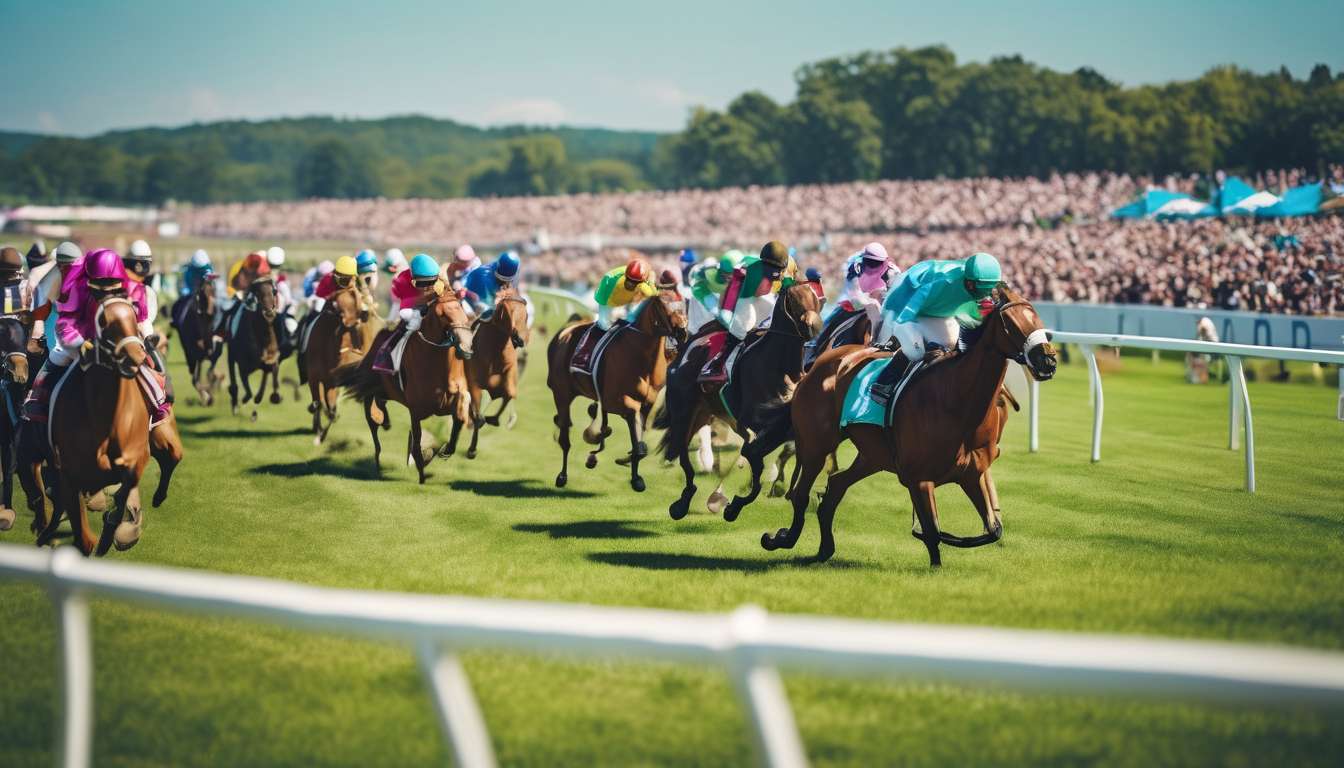
As racing enthusiasts, we understand the thrill of watching our favorite horses thunder down the track. To truly appreciate and predict these exhilarating races, we must become adept at reading race forms. In this article, we delve into the art of race form reading, a crucial skill for anyone passionate about horse racing.
Race Form Sections: Together, we will explore the different sections of a race form, deciphering the jargon and numbers that may seem overwhelming at first glance. We will cover:
- Past performances
- Track conditions
- Jockey statistics
Uncovering Insights: By examining these elements, we can uncover the insights hidden within them, enabling us to make informed predictions and enhance our racing experience.
Transforming Race Forms: Our goal is to transform those seemingly cryptic pages into a treasure trove of information that guides our betting strategies and choices.
Join us as we embark on this journey to become proficient in race form reading, turning each race day into a more informed and enjoyable experience.
Understanding Past Performances
To truly grasp race form reading, we must first understand how to interpret past performances effectively. As a community of racing enthusiasts, we know that past performances are our window into a horse’s history and potential. By examining these records, we gain insights into how a horse has fared against different competitors and conditions. This sense of shared knowledge helps us feel connected, knowing we’re all seeking the same thrill.
Speed Figures play a crucial role in this analysis. These numerical values tell us how fast a horse has run in previous races, allowing us to compare performances across different events. When we analyze speed figures, we’re not just looking at numbers; we’re piecing together a story of consistency and potential.
Class Ratings provide context by showing us the level of competition a horse has faced. They help us understand whether a horse has been competing against tougher or easier competition.
Together, speed figures and class ratings create a complete picture, making us all part of a community of informed bettors.
Deciphering Track Conditions
Understanding track conditions is crucial for interpreting how a race might unfold and assessing a horse’s performance potential. The state of the track can significantly impact a horse’s ability to perform at its best. By examining past performances, we can identify patterns that reveal which track conditions favor certain horses. Some horses perform better on a muddy track, while others excel on a firm surface.
Speed figures provide insights into how fast a horse has run under different conditions. These figures help us gauge whether a horse can replicate or surpass its previous performances in the current conditions.
Class ratings offer a snapshot of the competition level a horse has faced, which can be influenced by track conditions.
Together, these elements form a comprehensive picture, allowing us to bond over shared insights and make informed decisions. Let’s embrace this journey as we delve deeper into the art of race form reading.
Analyzing Jockey Statistics
Jockey statistics play a pivotal role in understanding racing dynamics, as they allow us to assess a jockey’s skill, strategy, and impact on a horse’s performance.
When we delve into the details, we see how past performances can reveal patterns in a jockey’s ability to handle different horses and track conditions. By analyzing these performances, we can identify jockeys who consistently excel, especially under challenging circumstances.
Speed figures offer valuable insights by helping us gauge how well a jockey can maximize a horse’s potential. Higher figures often reflect superior riding tactics and decision-making during a race.
Class ratings show us how jockeys perform in varying levels of competition. They indicate whether jockeys thrive in high-stakes environments or need more experience.
By coming together as a community of racing enthusiasts and sharing insights and observations, we deepen our understanding of jockey statistics. Through this shared knowledge, we enhance our race form reading skills and strengthen our collective bond.
Evaluating Trainer Records
Evaluating trainer records gives us crucial insights into a horse’s preparation and potential performance in upcoming races. Understanding a trainer’s approach and history can be invaluable, as it allows us to feel confident in our selections. By examining past performances, we can gauge how well a trainer conditions horses for specific race conditions.
A trainer with a strong record in similar races suggests consistency and expertise, which boosts our confidence in their horses.
Key aspects to consider include:
- How a trainer’s horses have fared in terms of speed figures
- Class ratings
Trainers who consistently produce horses with impressive speed figures demonstrate an ability to enhance their charges’ natural abilities.
Similarly, trainers who successfully navigate horses through different class levels reveal their skill in placing horses where they can excel. Together, these elements paint a picture of a trainer’s strategy and effectiveness, helping us feel part of the racing community and make informed decisions.
Let’s trust the process and embrace the excitement of race day!
Interpreting Speed Figures
Understanding how to interpret speed figures allows us to assess a horse’s potential performance in a race with precision and confidence. As a community of race enthusiasts, we recognize that speed figures offer valuable insights into a horse’s capability, going beyond mere past performances.
Speed figures quantify how fast a horse ran in its previous races, adjusted for variables like:
- Track conditions
- Distances
By examining speed figures, we can:
- Spot patterns
- Detect which horses are consistently improving
- Identify horses that might struggle in upcoming races
When we consider speed figures alongside class ratings, we gain a more comprehensive view of a horse’s competitive edge. It’s like piecing together a puzzle where each number tells a story of how a horse might fare against its peers.
By understanding these elements, we strengthen our shared bond as we discuss, debate, and predict outcomes together.
Let’s continue to delve into these numbers, enriching our collective race day experience.
Unveiling Class Ratings
Understanding Class Ratings
Class ratings allow us to evaluate how a horse’s performance compares to its competition. By analyzing past performances, we can identify patterns and trends that may not be immediately apparent. Class ratings provide insight into:
- The competition level a horse has faced.
- Whether a horse has consistently raced in tougher or easier fields.
Combining Insights
When combined with speed figures, class ratings offer a comprehensive view of each horse’s capabilities. This dual approach helps us:
- Identify horses that have proven themselves against high-caliber opponents.
- Predict future performances more accurately.
Community and Decision-Making
By focusing on class ratings and speed figures, we foster a sense of camaraderie among race enthusiasts. This shared pursuit:
- Empowers us to make informed decisions.
- Connects us more deeply to the thrilling world of horse racing.
Grasping Post Position Effects
Understanding post position effects can significantly enhance our ability to predict a horse’s performance in a race. We’ve all seen how a horse’s starting gate position can influence their race day outcome. By examining past performances, we can identify trends that show whether a particular horse tends to excel or struggle from certain positions. This insight helps us feel more connected to the racing community by sharing savvy observations others might miss.
Incorporating speed figures and class ratings into our analysis further refines our understanding. A horse with impressive speed figures might still face challenges if consistently positioned on the outside, where navigating the track becomes harder. Similarly, a horse with strong class ratings might underperform if trapped in a disadvantageous position.
By considering these factors, we deepen our connection to the race, understanding the nuances that can lead to a winning prediction. Together, we can unlock the secrets of post positions and enhance our race form reading skills.
Incorporating Race Strategy
Race Strategy Analysis
When we incorporate race strategy into our analysis, we focus on how a horse’s unique racing style and the jockey’s tactics can influence the race outcome. Together, we delve into past performances to understand each horse’s preferred running style:
- Leading from the front
- Conserving energy for a strong finish
By doing so, we create a sense of camaraderie, collectively unlocking insights that bring us closer to the heart of racing.
Key Performance Metrics
Speed figures are crucial as they allow us to compare a horse’s performance across different races and conditions. We also pay close attention to class ratings, which help us gauge the level of competition a horse has faced.
These elements, combined with our strategic insights, can guide us in predicting how a race might unfold.
Jockey’s Role
Let’s not forget the jockey’s role; their ability to read the race and adjust tactics can be the winning difference.
Together, our shared understanding and strategy make us a part of the thrilling race day experience.
How can race form reading help in predicting the outcome of a horse race?
Race form reading is a crucial skill for predicting the outcome of a horse race. It involves analyzing several key factors:
-
Past Performances: Reviewing how horses have performed in previous races can give insights into their current form and potential.
-
Jockey Statistics: The experience and success rate of jockeys can influence race outcomes significantly.
-
Track Conditions: Understanding whether the track is dry, wet, fast, or slow can impact a horse’s performance, depending on its preference.
By studying these factors, one can make informed decisions about which horse is likely to perform well in an upcoming race. This information is invaluable for making strategic bets, thereby increasing the chances of success at the racetrack.
What are some common mistakes beginners make when reading race forms?
When beginners start reading race forms, common mistakes often include:
-
Focusing solely on the horse’s past performance without considering other factors like track conditions or jockey history.
-
Getting overwhelmed by the sheer amount of data available and missing key indicators.
-
Overlooking the importance of studying trends and patterns, which can provide valuable insights into predicting race outcomes.
By avoiding these errors, we can improve our race form reading skills and make more informed decisions.
How often should race forms be updated or reviewed for accuracy?
Regular Review of Race Forms
We typically review race forms regularly to ensure accuracy and stay informed. Keeping up with updates helps us make informed decisions and avoid mistakes.
Importance of Staying Updated
It’s essential to stay on top of changes as they can impact our strategies and outcomes. By reviewing race forms frequently, we can:
- Spot any discrepancies
- Identify new information that may affect our decisions
Benefits of Frequent Review
This practice helps us stay ahead and make smarter choices when it comes to betting.
Conclusion
Now that you’ve mastered the art of race form reading, you’re ready to tackle the track with confidence.
By understanding the following key elements, you have all the tools you need to make informed decisions:
- Past Performances
- Track Conditions
- Jockey and Trainer Stats
- Speed Figures
- Class Ratings
- Post Positions
- Race Strategy
So next time you’re at the races, trust your instincts and let your knowledge guide you to success.
Happy handicapping!